
Whitepaper
The Passage Whitepaper
Where we came from, where the metaverse is going, and how Passage fits in.
Our Story
The Passage journey began in 2017 as Enva Division, a creative agency focused on designing custom environments for brands across digital, entertainment, and retail.
These digital environments allowed clients to view, test, and interact with real-world displays in 3D before they were actually built. This made the creative build easier and cheaper, giving teams better tools to put their ideas into action.
Through our work with brands like Warner Brothers Studios, Capitol Records, the Dallas Cowboys, Red Bull, Amazon Studios, and American Girl, we quickly saw the broader potential for these environments as a new frontier of digital experience began to take shape before us.
As the global pandemic forced brands to think differently in 2020, Passage became the solution to meet their evolving needs. During this time, we honed in on creating fun, immersive digital environments that helped our clients connect with and engage their audiences.
The Rise of the Metaverse
As the world was quickly forced to go virtual, the idea of combining digital and physical realities to create new value, efficiencies, and experiences grew.
Enter the Metaverse, the next iteration of the internet that cohesively integrates the digital and physical layers of reality.
The Metaverse is overlaid by Web3, its value layer. Built on decentralized blockchains that aren’t controlled by any single service provider, Web3 is transparent, permissionless, and immutable, with value and ownership created through cryptocurrencies, fungible tokens, and non-fungible tokens (NFTs).
In 2020, the NFT market was valued at $100 million, and by the end of 2021, it had grown to $25 billion (a 25000% increase).In November 2021, Mark Zuckerberg announced his trillion-dollar bet, rebranding Facebook as “Meta,” with the aim of creating a future powered by Web3 technologies. Others, from Microsoft to Google and Nvidia, soon followed, and in the first half of 2022 alone, over $120 billion was invested in the Metaverse.
There has been a lot of criticism of Meta, in particular, for appearing out of touch with its intended audience. To many, its focus on “getting lost in the Metaverse” sounds like a ploy to continue farming data from its users.
So is the Metaverse just a fad driven by a billionaire and an economic bubble?
We believe there’s something much deeper at play.
The Future of the Metaverse
To understand where Passage is headed, we can look at two major economic shifts driving the concept of the Metaverse forward: the creator economy and the rise of social gaming.
The Next Chapter of the Creator Economy
The "creator economy" is a business model in which individuals create and sell content, products, or services on the internet. It encompasses a wide range of activities, from blogging, podcasting, and vlogging, to music production and software development.
The creator economy is also defined by the cycle of creators getting noticed on platforms like YouTube, Twitter, Instagram, and TikTok, then building a business around their audience with Lego-like infrastructure (think Stripe for payment processing, Shopify for hosting an online store, etc.).
At least 50 million people worldwide consider themselves creators; of those, 46.7 million consider themselves amateurs. After investment in the creator economy topped $5 billion in 2021, the industry is now estimated to be worth over $100 billion.
.png)
From Linktree’s 2022 Annual Creator Report
The platforms available for creators to launch on are crowded and predominantly focused on similar features: video, audio, image, and text posting.
We believe there is a significant demand in the marketplace for platforms that are meeting unmet audiences, and there is one audience in particular that is poised for explosive growth.
The Emerging Demand for Games
Access to mobile devices has created explosive growth in the games market in recent years. In 2020, mobile gaming generated the highest revenue in the global gaming market, which amounted to $77.2 billion. (Wijman, 2020)
While playing games has become more accessible, creating them has remained complex. It takes years of development experience with complicated game engines and other 3D software to create games.
This is not too different from the film industry. In 2006, you still needed knowledge of complicated software and cameras in order to make video content like films and commercials. Today, everything from filming, editing, and distribution can be done with one device and one application like TikTok.
Consider this example that was recently shared with our team:
_“Two close friends were contracted to work with Coca-Cola to produce commercials. One was a creator on TikTok who filmed with a couple friends and an iPhone. This filmmaker edited hers directly on her phone, while the other filmmaker used a full crew, production kit, and camera package and spent several days with an editor. Both filmmakers received the same five-figure pay for their projects. Video production has been democratized, and gaming is likely next.”
_There are many game engines that are focused on trying to make creating games easier, such as Unreal Engine, Unity, and Godot. Unity in particular launched with the stated mission of democratizing game development. While all of these platforms have made huge strides, they still take a considerable amount of time to learn, and the process of getting your game published holds many hurdles.
Enter Roblox.
The top mobile game by consumer spending is Roblox, a game whose revenue model depends on user generated content. This is the creator economy at work. Roblox is a game that makes it easy for players to create games inside of it. As of January 2023, Roblox has a market cap of 18.83 billion dollars, and its revenue for the twelve months ending September 30, 2022, was $2.215 billion, a 33.39% increase year-over-year. Roblox annual revenue for 2021 was $1.919B, a 107.73% increase from 2020.
According to NPD, of U.S. children ages 2–17 (64 million) play video games, and 73% of Americans ages 2 and older play video games like Roblox. The next generation will not only be native to the creator economy, but they will also be native to online games like Roblox that allow them to participate as creators.
As more creators enter the market and artificial intelligence (AI) tools begin to simplify the process of creating assets, the demand for a “game creator"-focused social platform will explode.
But this isn’t just a young person’s trend. People aged 45–54 account for 63.3% of in-app purchases up to $10. Those aged 55–64, while making up the smallest audience, purchase at a rate of 77.8%.
There is a significant and growing demand for games, and the creator market is primed to be able to meet it—but they will need easy-to-use tools, similar to what creators enjoy on TikTok.
Core Beliefs
We've been drawn to social and digital platforms by corporations that don't care how addicting they are, so long as they can monetize our data. This has left many people feeling exploited.
Platforms like Passage must take care of their user base by encouraging them toward real human connection and in-person experiences. Though much of our life is online, we still eat and breathe in the real world. Platforms that drive users to spend countless hours online are going to fail in the long term as people seek to “quit their addictions.”
Our 10-year vision is to expand our creator tools to enable the gamification of leaving the computer screen and participating in real world experiences. Even now, we’ve begun to lay the bricks of our thesis through partnerships with projects that have real world participation.
In the next section, we will share our core pillars for building the underlying infrastructure of these community-driven game experiences.
World Building 101
At their core, games are like miniature worlds. Projects like Minecraft and Roblox already use this language to describe the experiences their players are creating.
Over the past five years, our team has developed a unique perspective on how virtual technology changes the way people enjoy entertainment and do business.
We have been hands-on in every area of virtual and physical production, from 3D layouts and rendering to developing core video and audio infrastructure for use in 3D environments.
At one point, all of these areas depended on large teams, but now a single creator can better optimize and make high-quality game content faster.
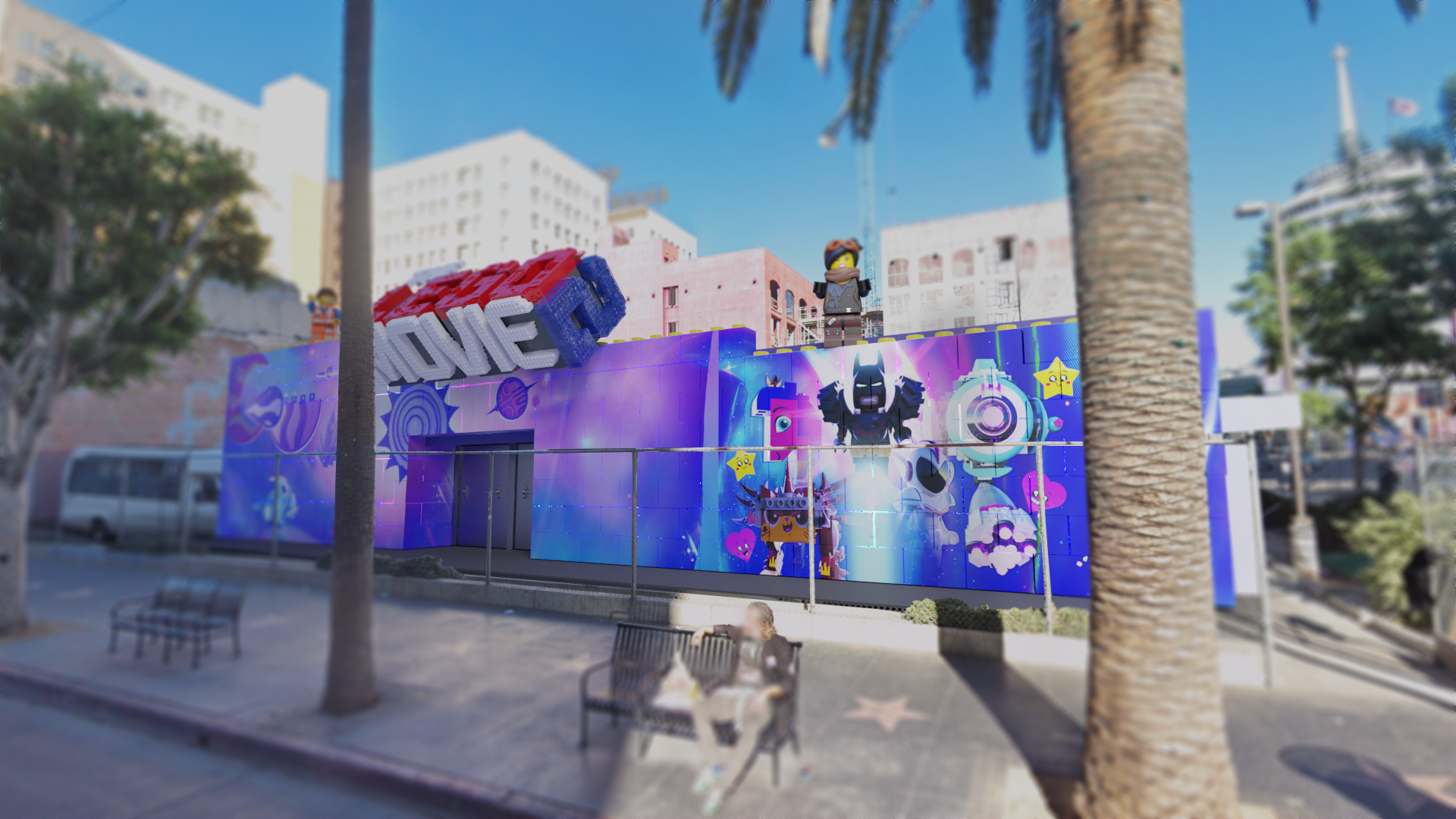
Being deeply involved in the digital technology around live events has provided us with a unique perspective on the possibilities for virtual worlds, even beyond games. We’ve spent the last two years iterating on our technology, driving thousands of users through our experiences with mainstream brands.
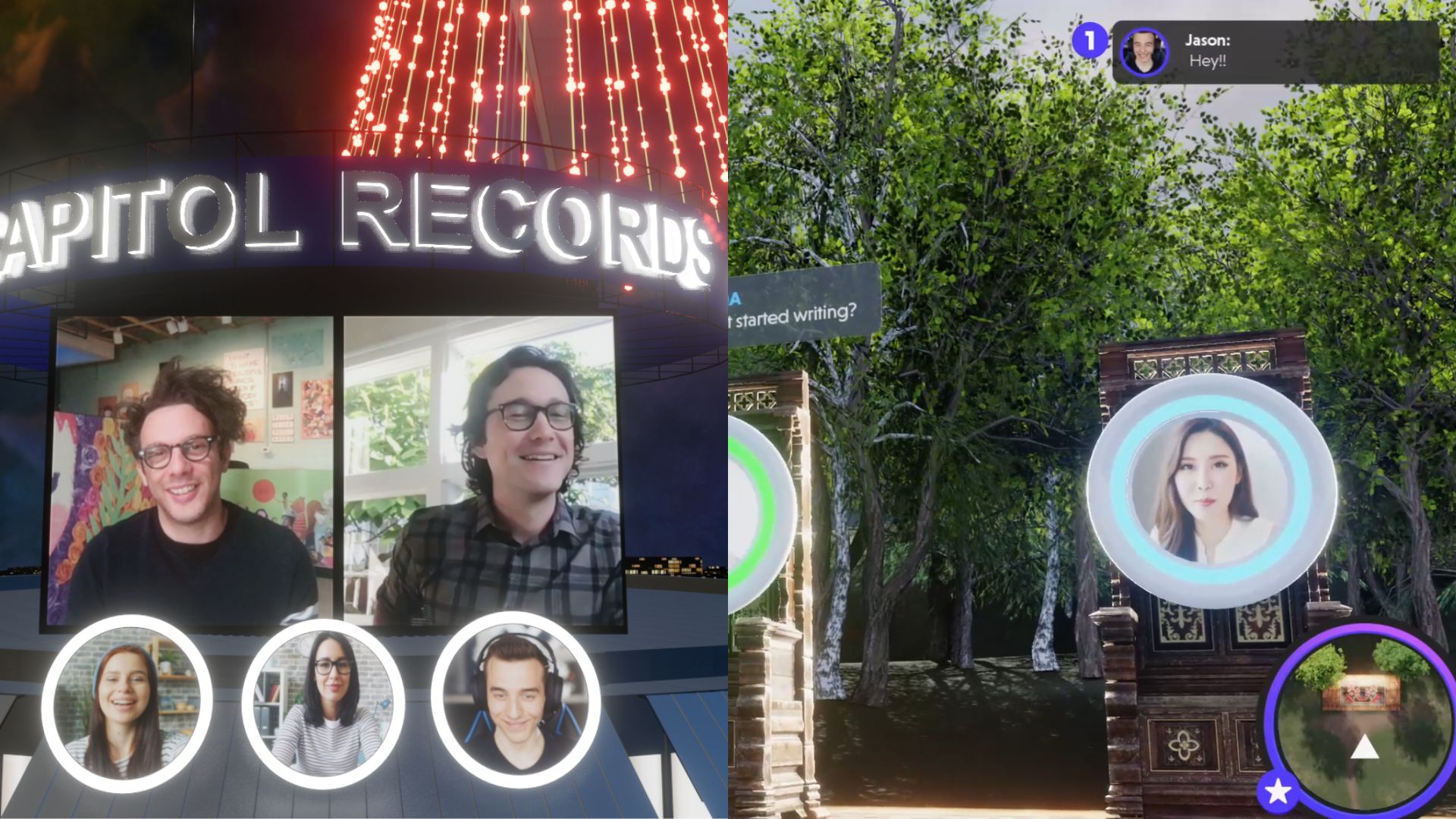
The technology around virtual worlds is evolving rapidly, and we’ve focused on bridging industry level tools like Unreal Engine 5 to enable high quality assets to be brought to our creator community. We have also focused on enabling cloud-based streaming in Passage, so creators and users can access worlds from any device.

AI Is Making It Increasingly Easier to Produce Games
AI is already having a significant impact on game production, and there are several key areas it stands to significantly impact our platform.
-
Content Creation: Already, we’re seeing AI being used to create written and visual content such as game assets, game levels, landscapes, and other in-game content. Many of these solutions aren't fully automated yet and rely on human QA, but we'll soon see creators using these tools to produce large volumes of assets.
-
Content Moderation: It is a painstaking process to moderate online communities, but AI can quickly identify and flag inappropriate or offensive content automatically. This can help small teams of creators ensure that their content is suitable for their intended audience.
-
Personalization: AI is being used to personalize content and recommendations for individuals, which can help creators better target their content and increase engagement.
-
Testing: Game testing is incredibly time consuming and takes large teams to ensure a game is delivered with minimal bugs. AI projects like modl.ai use an army of AI bots to rapidly play through games to identify bugs and other issues. This can help smaller creators find and fix problems quickly and efficiently.
-
Player Modeling: Finally, AI is being used to analyze player behavior and preferences, which can help game creators make more personalized and enjoyable experiences in their games.
The Passage Ecosystem
Passage provides an ecosystem for building and connecting virtual and physical experiences through creator-built games.
On its face, Passage is a social network. Under the hood, it’s an open worldbuilding platform with invisible infrastructure for connecting digital / metaverse experiences.
The Passage experience starts with a familiar 2D interface. From there, users can discover and access immersive 3D worlds.
Built with Cosmos, Passage is blockchain-agnostic and offers a suite of tools to make virtual worlds more accessible: in-browser streaming, cross-world commerce for fungible tokens and NFTs, social functionality, and 3D communication infrastructure.
Dashboard: Discover & Experience on Any Device
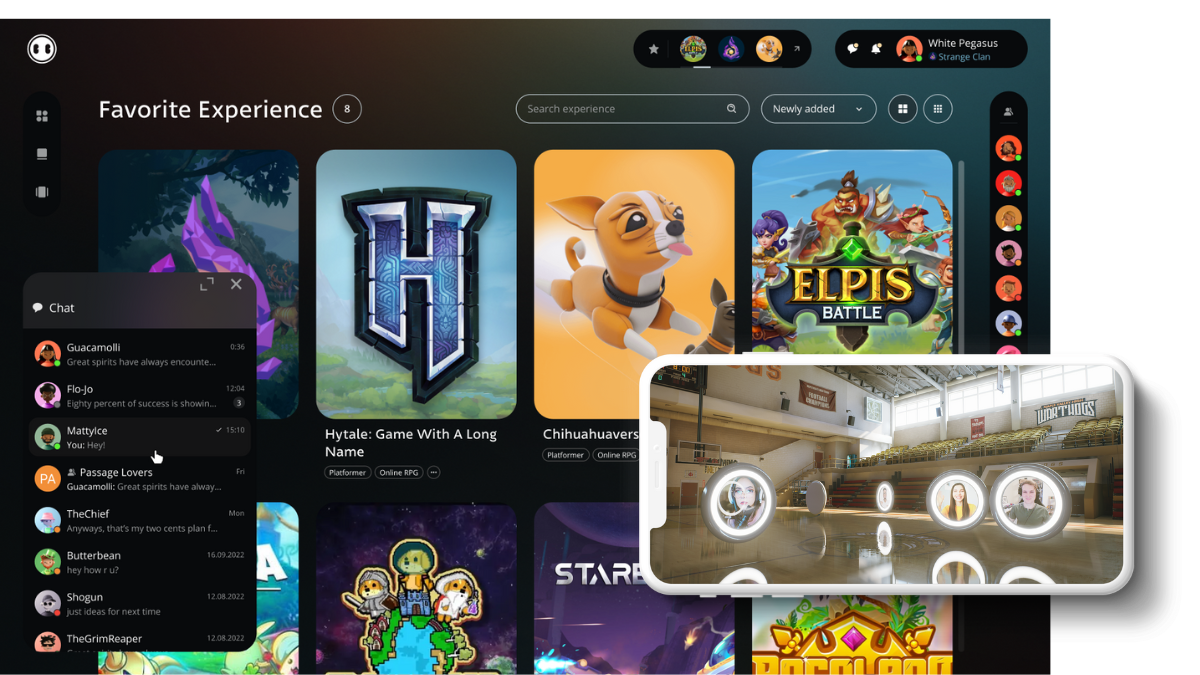
The Passage Dashboard is where your experience begins. With a familiar 2D interface, the dashboard allows you to easily:
-
Discover and access Passage-powered worlds
-
Interact with your connections and communities
-
Manage your assets, achievements, experiences, and network
Passage worlds can be accessed with one click through a browser on any device, no apps or downloads required.
While the dashboard will initially be launched as a web app, a local client will also be offered to support downloadable worlds, so people can use their own hardware to enter worlds without streaming services.
World Builder: Create Your Open World
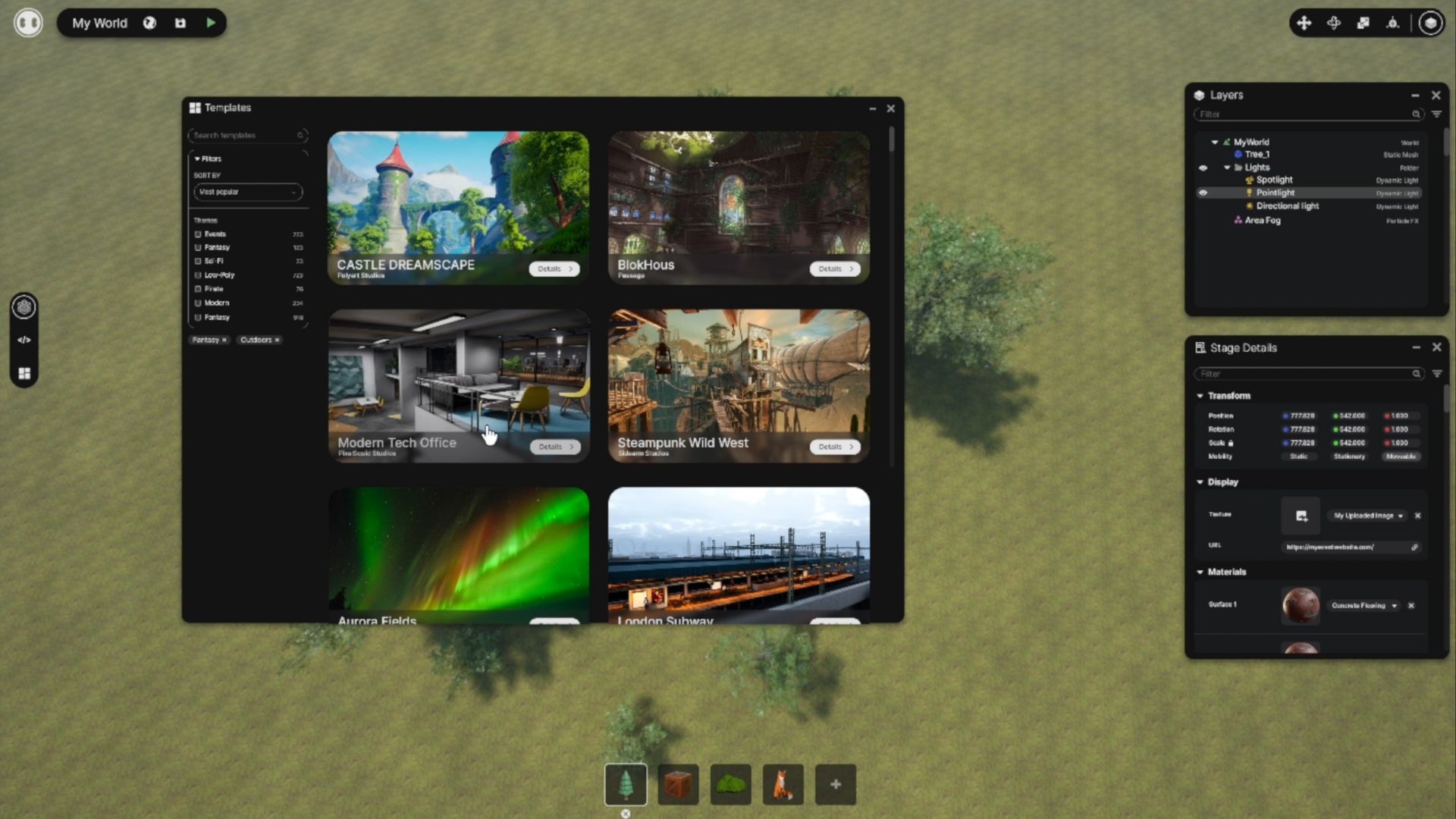
Passage offers a set of powerful, flexible tools for creating and connecting immersive 3D worlds.
-
Templates: Start with a template from our marketplace, then customize your world with 3D assets from our library.
-
World Builder: Build a fully custom world from scratch, and modify it via a simple drag-and-drop editor.
-
Plugins: Add custom functionality to your world by accessing our Plugin Marketplace. From game mechanics to ticketing systems and revenue-generating advertisements, Passage plugins transform a world into an engaging experience.
-
SDK: Connect pre-existing worlds, games, and apps—or create something entirely new in Unreal Engine with our SDK
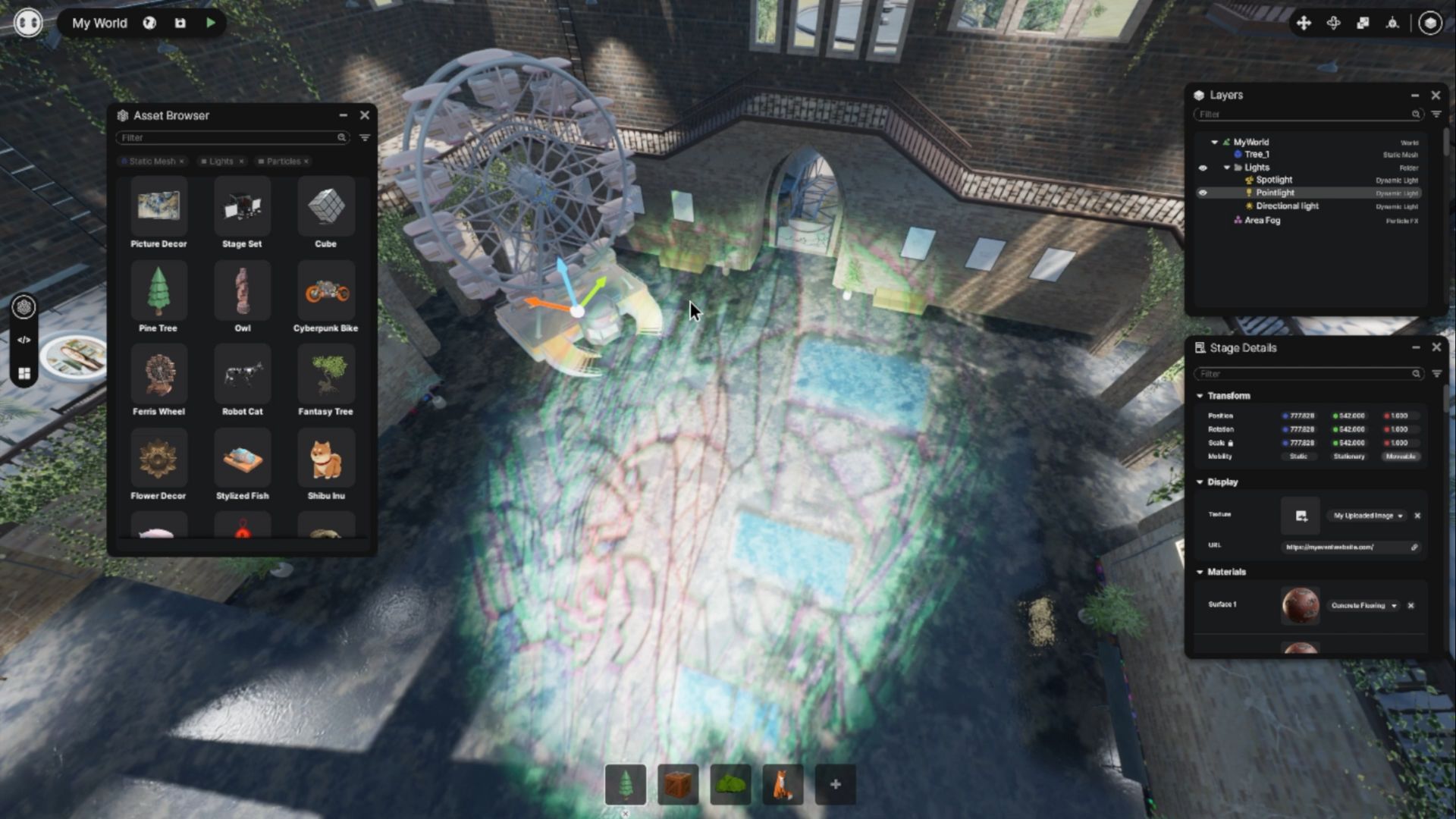
No matter which industry you’re in, Passage worlds feature everything you need to deliver engaging games and experiences:
-
Real-Time Streaming: Passage worlds can be accessed from the browser on any device—no apps or downloads required. Streaming happens with cloud compute via AWS, Google, and the decentralized cloud compute network Akash.
-
Unique 3D Video Chat Tools: Virtual is now more authentic and organic thanks to custom video chat tools. Experience talking face-to-face within a 3D environment, with 3D spatial audio and video.
-
Immersive Social: Connections, friends, and followers flow seamlessly across 2D and 3D environments.
-
Instant Commerce: Monetize your world through subscriptions, ticketing and gated experiences, digital and physical goods, and more. Create and sell NFTs with integrated utility in your world.
-
Stunning Graphics: Built with Unreal Engine 5, Passage worlds feature realistic, high-quality graphics.
Marketplace: Create & Sell 3D Assets
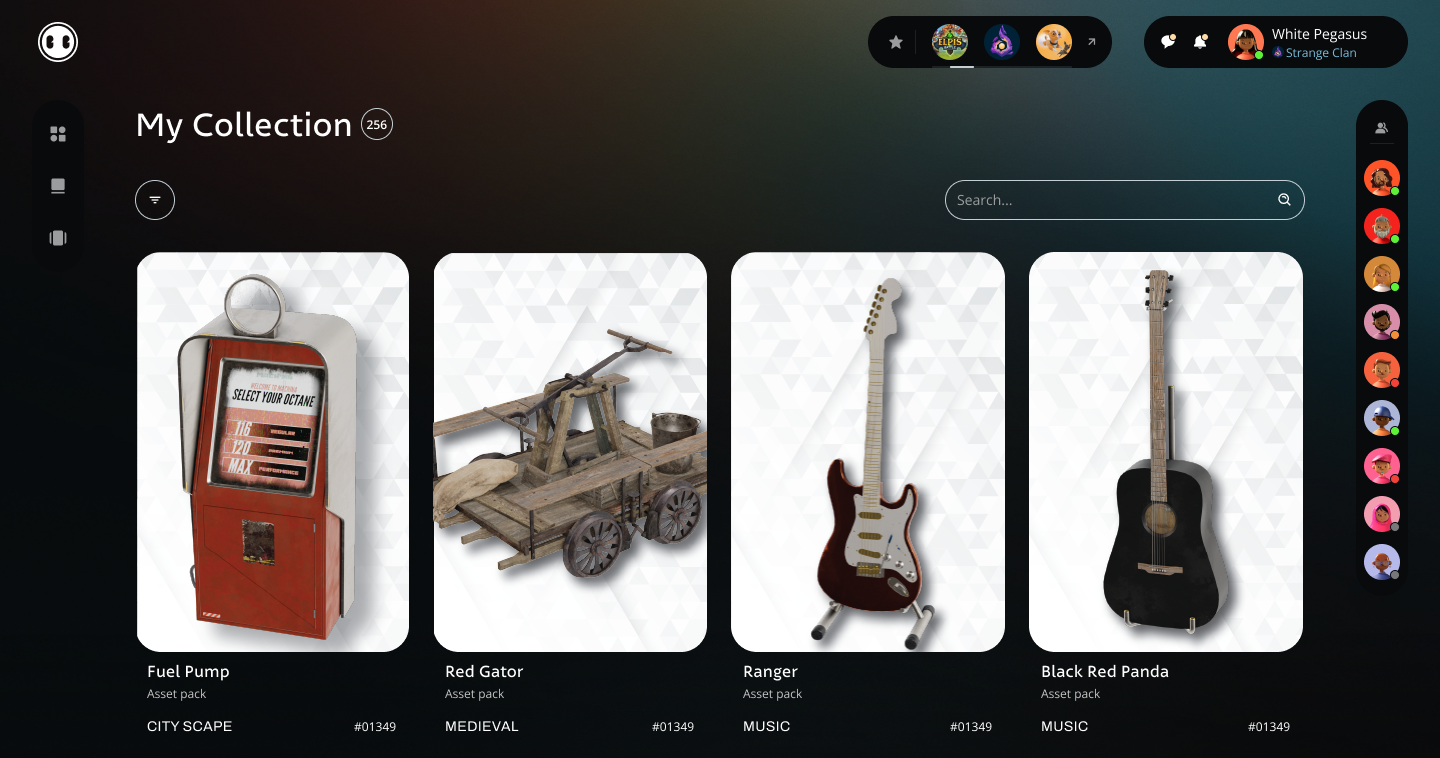
The Passage Marketplace enables users to discover, create, and sell in-world assets.
The open marketplace will host both traditional 3D assets, and eventually tokenized assets (NFTs), in three initial categories:
-
In-World Assets: Creators can sell 3D art and immersive games to world builders, which can be easily dragged-and-dropped into Passage worlds. This is similar to a stock library, like Envato Elements or Adobe Stock.
-
World Building Templates: Creators can design entire world templates that can be purchased and used by brands and individuals to host Passage experiences.
-
Plugins: Creators can create their own plugins and sell them on the marketplace. This is similar to the Shopify or Wordpress plugin marketplace, extending the functionality of the platform to meet the needs of creators.
All assets are subject to a traditional revenue share model with Passage.
NFT creators can set up a royalty between 0–10% at the point of creation, earning revenue each time the NFT is traded.
The Passage Marketplace was launched in Beta in early 2022 on Juno, a network that provides a sandbox environment for the deployment of interoperable smart contracts in the Cosmos ecosystem. Passage was the first NFT marketplace in the Cosmos ecosystem to use the Cosmos ATOM as a medium of exchange.
Relationship Protocol: Connect Decentralized Worlds & Experiences
Passage gives you the ability to move between decentralized worlds, while retaining your digital identity and relationships across each world and experience.
This is made possible by the Passage “Relationship Protocol,” a decentralized social layer that allows you to own your relationships, connections, and achievements.
The Relationship Protocol is a new standard for interoperability.
Social connections and digital goods are stored on the blockchain, so your identity follows you into every Passage-integrated world. With the Relationship Protocol, users can’t be de-platformed. Friends and followers are no longer confined to individual social networks.
As more projects and brands integrate the protocol, the Passage network grows exponentially.
Built on the Cosmos SDK, the Passage blockchain is compatible with every Cosmos chain through the Inter-Blockchain Communication Protocol (IBC). In the future, Passage will expand the Relationship Protocol to support leading networks like Ethereum, BNB Chain, and Crypto.com.
Fostering an Open Platform
Our vision is to create a uniquely open and transparent platform.
In the future, key elements of the Passage ecosystem will be open-sourced, including the marketplace, smart contracts, and more.
Roadmap
2022
-
Passage Chain Mainnet Launch
-
Passage Marketplace Launch
-
Passage Dashboard Front-End Reveal
-
NFT Staking Contract
-
Marketplace Offers Code Complete
-
Marketplace Auctions Code Complete
-
Marketplace UI Redesign
2023
-
Passage Dashboard Closed Alpha
-
Passage Indexer
-
PASG Private Sale Closed
-
PASG Token Launch
-
Marketplace PASG Integration
-
Optimized Unreal Engine 5 Stack
Q1 2024
-
Passage Elite Internal Alpha
-
Open-Source Community Launch
Q2 2024
-
Passage Elite Closed Alpha Launch
◦ Create & Manage Events in Dashboard
◦ Media Playback
◦ Invite Guests via Link or Email
◦ User Moderation
◦ Screen Sharing -
Passage Elite Payments in Fiat
◦ First Paid Users Onboarded
◦ Purchase & Spend Passage Streaming Points -
Passage Indexer v1
-
Passage Archive Node
Q3 2024
-
Passage Elite Closed Alpha (Ongoing)
-
Features Requested by Closed Alpha Users
-
Akash Back End Integration
-
NFT Staking Smart Contracts
Q4 2024
-
Passage Elite Closed Alpha (Ongoing)
-
Features Requested by Closed Alpha Users
-
Customizable Avatar System ("PALS")
-
PASG Airdrop Checker
Q1 2025
-
Passage Elite Closed Alpha (Ongoing)
-
Single-Link Entry
-
NFT Gating
-
Mobile Support
-
Passage Indexer v2
Q2 2025
-
Passage Elite Closed Beta
-
Avatar Customization NFTs
Q3 2025
-
Passage Elite Closed Beta (Ongoing)
-
Akash Front End Integration
-
Marketplace UI/UX Redesign & Mobile Optimization
-
Marketplace Sales Data
-
NFT Collection Launch Interface
-
NFT Staking Front End
-
IBC ATOM Marketplace Payments
-
Passage Elite Payments in PASG
-
World NFTs
Q4 2025
-
Passage Elite Open Beta
-
Companion NFTs
-
3D Character NFTs
-
NFT PFPs
2026
-
Plugin NFTs
-
Unreal Engine Build Tools
To view open-source projects and bounties, visit the Passage Chain Github.
Tokenomics
Passage (PASG) is a utility token that fuels the Passage ecosystem. It is designed to incentivize open-source development and creator contributions on the platform by facilitating the decentralized relationship protocol, governance, security, and rewards.
As the platform grows and users require PASG for purchasing services (e.g., streaming, marketplace transactions, etc.), they will naturally need to compete with retail purchasers. Platform growth will also result in greater awareness of Passage, which will in turn further increase competition for available PASG.
Utility
The PASG token will be used for the following purposes:
**
Governance**
Token holders will have the right to vote on proposals and make decisions related to the platform's direction and development. This includes changes to the revenue model, platform features, and the overall ecosystem.
Decentralized Asset Management
Token holders can use PASG to propose and vote on the addition of new 3D assets to the platform's marketplace, as well as revisions to existing assets. For a more detailed explanation, see the section titled “Decentralized Asset Management Governance.”
Incentivizing Open-source Contributions
Developers can earn PASG tokens by contributing to the platform's development, such as bug fixes, new features, and improvements to existing functionality.
**Staking
**PASG holders can stake and delegate their tokens to one or more Passage validators, who will receive a percentage of fees from staked tokens delegated to them. PASG holders in turn will receive additional PASG token rewards for contributing to the network.
Payment for Platform Services
Creators and users can use PASG tokens to pay for premium features and services on the Passage Platform, such as hosting larger events or accessing exclusive assets. Alternatively, creators can use other payment methods with an additional fee which is determined by governance.
Governance Process
The governance process for the Passage Platform will consist of the following steps:
-
Proposal Submission: Token holders can submit proposals for changes to the platform or its ecosystem. These proposals must include a clear description, rationale, and potential impact on the platform.
-
Proposal Discussion: The community will have a designated period (e.g., 7 days) to discuss the proposal, ask questions, and provide feedback.
-
Voting: After the discussion period, token holders will vote on the proposal using their PASG tokens as voting power. A minimum quorum (e.g., 20% of total token supply) must participate in the vote for the proposal to be valid.
-
Proposal Execution: If the proposal passes with a majority vote (e.g., >50% approval), it will be implemented by the Passage Platform's core team or the relevant community members responsible for the specific aspect of the platform.
Special Interest Groups
To ensure that the governance process is efficient and focused, Special Interest Groups (SIGs) will be introduced within the governance structure.
SIGs will consist of community members with domain-specific expertise or interest in specific areas of the Passage project.
Formation of SIGs
-
Any token holder can propose the creation of a new SIG by submitting a proposal outlining the SIG's focus, objectives, and initial members.
-
The community will vote on the proposal, and if it passes with a majority vote, the new SIG will be established.
Roles & Responsibilities
-
Each SIG will have a designated leader or coordinator who is responsible for organizing meetings, setting agendas, and communicating updates to the broader community.
-
SIG members will be responsible for researching, discussing, and proposing changes or improvements within their specific domain.
-
SIGs may create subcommittees or working groups for specific tasks or projects within their area of focus.
Governance Integration
-
SIGs will submit proposals for changes or improvements within their domain to the broader community for discussion and voting.
-
Community members who are not part of a SIG can still participate in discussions and vote on proposals, but the formation of SIGs will help streamline the decision-making process by allowing domain experts to focus on specific areas.
-
To prevent the centralization of decision-making, each SIG's decisions will still be subject to the broader community's approval through the standard governance process.
Transparency & Accountability
-
All SIG meetings and discussions will be open to the entire community, and meeting notes or summaries will be made publicly available.
-
SIGs will be required to report their progress, activities, and any proposed changes to the community on a regular basis (e.g., monthly or quarterly).
-
Community members can request to join a SIG at any time, subject to the approval of the SIG's current members.
By integrating SIGs into the governance structure, Passage can ensure that qualified individuals contribute to specific areas of the project while reducing the need for every token holder to participate in all governance decisions. This approach will enhance the efficiency, focus, and overall effectiveness of the governance process.
Decentralized Asset Management Governance
The PASG token will play a vital role in managing both community-generated assets for sale and open project assets contributed by the community. The distinction between these two types of assets will be made as follows:
Community-Generated Assets for Sale
-
Token holders can use PASG to propose the addition of their own 3D assets to the marketplace, or put up bounties for assets they wish to see created and listed.
-
The community will vote on whether to accept these assets, ensuring that only high-quality and relevant assets are available for purchase on the marketplace.
-
The asset creator will determine the price and licensing terms for their asset, and the Passage Platform will take a percentage of the sales as part of its revenue model.
-
Any proposed changes or revisions to these assets will also be subject to a community vote, with the asset creator's approval being a prerequisite.
Open Project Assets
-
Community members can also contribute 3D assets to the open project, making them freely available for all users on the Passage Platform.
-
Token holders can use PASG to propose and vote on the addition of these open project assets, ensuring that they meet the platform's quality and relevance standards.
-
The community will also vote on any proposed changes or revisions to open project assets.
-
Open project assets will be subject to specific licensing terms that allow for free use within the Passage Platform, while protecting the contributors' intellectual property rights.
Community Involvement
To foster a strong and active community, the Passage Platform will support initiatives such as:
-
Regular community calls to discuss updates, proposals, and other relevant topics
-
Hackathons and developer events to encourage open-source contributions and collaboration
-
Educational resources and onboarding programs to help new users and developers get started with the platform
-
A dedicated forum or chat platform for ongoing discussions, support, and feedback.
Distribution
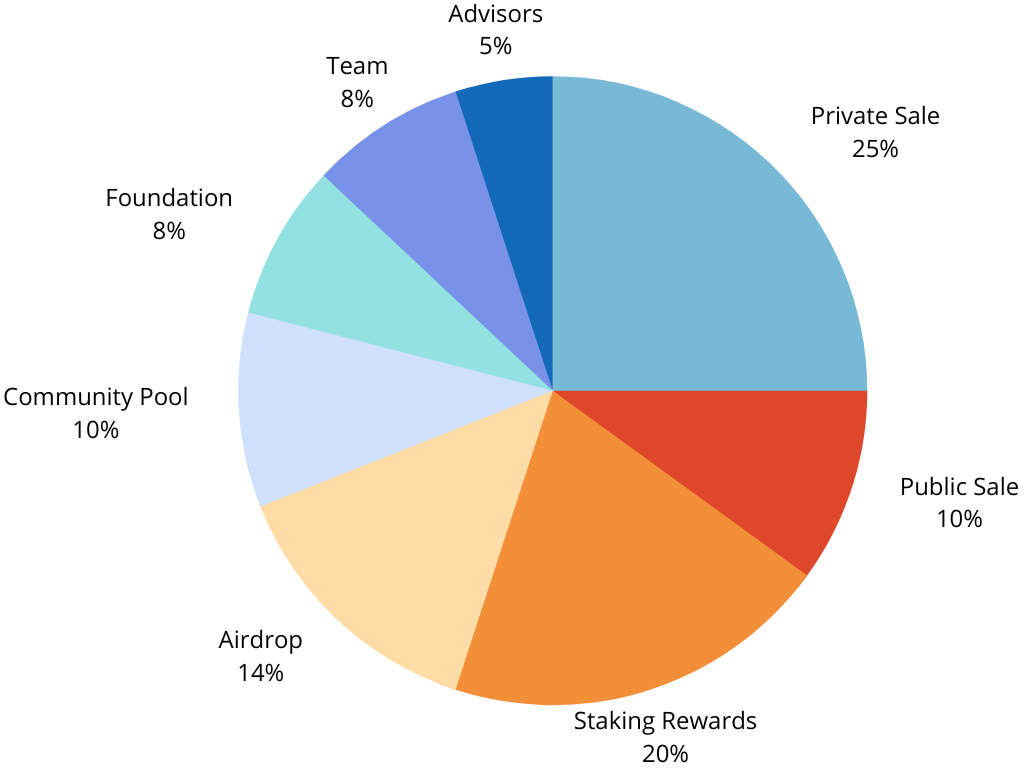
The total supply of PASG is fixed at 1,500,000,000 tokens.
Token genesis event (TGE) took place on August 17, 2022.
-
Private Sale: 25% (375,000,000 PASG)
-
Public Sale: 10% (150,000,000 PASG)
-
Airdrop: 14% (210,000,000 PASG)
-
Staking Rewards: 20% (300,000,000 PASG)
-
Community Pool: 10% (150,000,000 PASG)
-
Passage Foundry: 8% (120,000,000 PASG)
-
Team: 8% (120,000,000 PASG)
-
Advisors: 5% (75,000,000 PASG)
Private Sale
A private sale of PASG was held for strategic and institutional partners in 2022/2023.
Vesting began September 25, 2023.
-
Token Price: $0.02
-
FDV: $30M
-
Amount Raised: $6M
**Public Sale
**The PASG token was launched publicly via StreamSwap on August 29, 2023.
20M unlocked tokens were made available at this time across two streams:
-
10M in a PASG/ATOM stream
-
10M in a PASG/OSMO stream
**Foundry
**The Foundry is the Passage treasury. To enable the continued growth of the Passage ecosystem, the Foundry will serve the following purposes:
-
Provide incentives for liquidity pools on decentralized exchanges
-
Fostering and supporting the creation of innovative and useful projects built on or in support of the Passage ecosystem
-
Serve as a capital reserve for the development of the Passage ecosystem
The Foundry’s sources of income include:
-
Initial allocation
-
Transaction fees
-
Licensing of Passage-owned worldbuilding assets
-
Worldbuilding partnerships
With the advent of governance, voting may be used to decide on the prioritized paths for the Foundry.
Community Pool
The Community Pool is the Passage ecosystem fund, which will be used for strategic partnerships, growth opportunities, and bolstering the Passage ecosystem.
Team & Advisors
Allocated for the core Passage team and members of the Passage Advisory Board.
Airdrops
Airdrops may be used to bolster interest in the ecosystem and incentivize engagement with the Passage ecosystem and marketplace.
50% of the total airdrop supply (105,000,000 PASG) was allocated to Strange Clan NFT holders. 66% of this airdrop was available to claim for 90 days between October 23, 2023 and January 21, 2024. The final 33% was available to participants who staked 100% of their initial airdrop tokens for 14 months.
All unclaimed airdrops are subject to burn, which will decrease the total available supply.
**Staking Rewards
**PASG inflation began September 8, 2023 following a governance vote (Proposal 2).
Stakers will earn rewards in accordance with the schedule below.
APR (100% Staked):
-
Year 1: 15%
-
Year 2: 12%
-
Year 3: 10%
-
Year 4: 10% (if supply remains)
-
Year 5: 10% (if supply remains)
-
Year 6+: 0%
The APR is intended to create long-term engagement through staking (21 days unbonding) and align with yields offered by other Cosmos tokens and LP opportunities.
After Year 5, staking rewards will come through platform fees, with 10% of all fees on Passage allocated toward Staking Rewards.
Release Schedule
The token release schedule is as follows:
-
Private Sale: 12-month cliff followed by continuous vesting until 2 years from TGE. Vesting begins September 25, 2023.
-
Public Sale: 20% at TGE; 12-month cliff followed by continuous vesting for 6 months. The 20% unlocked at TGE will be used to setup the StreamSwap detailed above.
-
Airdrop: 35% at TGE; 2-month cliff followed by continuous vesting until 3 years from TGE
-
Foundry & LP: 50% unlock at TGE. Remaining 50% has a 1-year cliff followed by continuous vesting until end of Year 3.
-
Community Pool: 3-year cliff with continuous vesting until end of Year 5
-
Team: 15-month cliff followed by continuous vesting until 3 years from TGE
-
Advisors: 15-month cliff followed by continuous vesting until 3 years from TGE
Team
Founded in 2020, Passage is led by a decentralized team of veterans in ecommerce, web3, and virtual production.
Combining a creative background with technical problem-solving, the team has a track record of building digital environments and niche experiential events for consumer audiences.
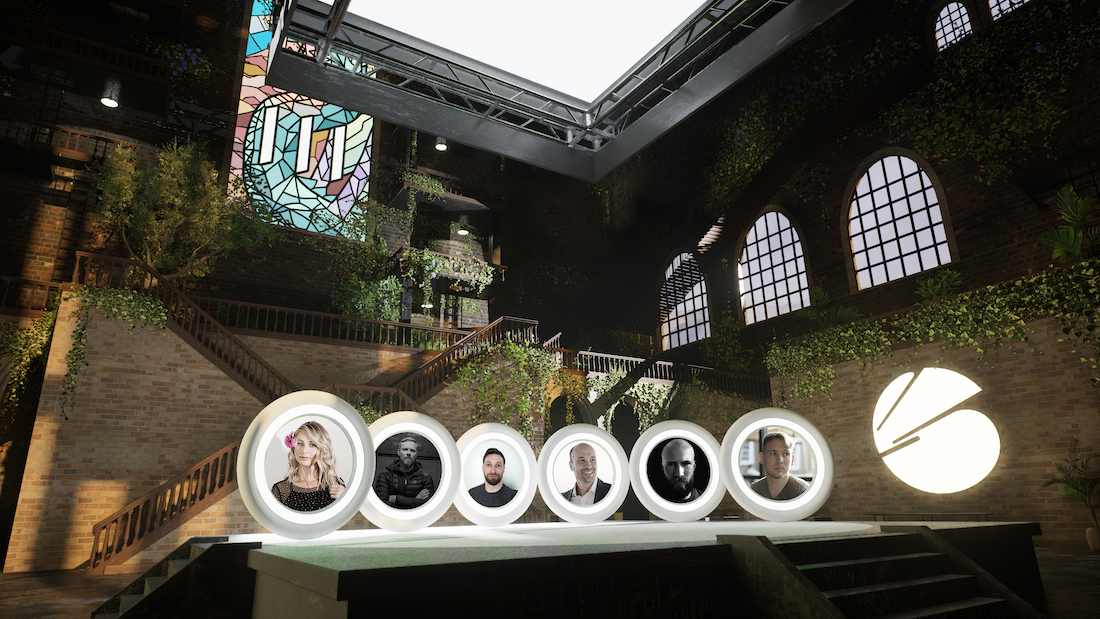
• Arel Avellino, CEO: 7-figure serial entrepreneur who has led both marketing and operations at Passage. Arel is a storyteller, problem solver, and gamification nerd with experience spanning film, e-commerce, and blockchain.
• Lex Avellino, Founder & Chief Creative Officer: Over a decade in virtual production and digital experiences. Lex has a deep technical and creative background, having led a creative studio and worked with clients like Warner Brothers, Capitol Records, Marvel, and Red Bull.
• Mike Cianni, CTO: Experienced software developer who has built scalable, accessible, standards compliant websites and mobile apps. Mike has led Passage development since the platform’s early days.
• Ryan Dolinsky, Chief Product Officer: Senior product owner with years of product development experience. A Riot Games vet, Ryan produced augmented reality (AR) for the World Championships, which reached over 75 million people.
• Bryana Kortendick, Chief Communications Officer: Experienced across marketing, operations, comms, and PR in Web3. Bryana has led campaigns for a wide range of blockchain-related product launches, initiatives, partnerships, and funding rounds.
Passage is also advised by its former CEO and current board member, Caleb Applegate, whose executive career spans decades in blockchain, gaming, and entertainment.